
And He Shall Be Called...
The world of corruption and political drama isn't new to our time. Long ago in the city of David, a young woman gave birth to a child who would change the course of history.

I’m reading a book right now by Madeline L’Engle called Walking On Water. It is her defense of Christian art. She is one of my favorite writers. I remember reading A Wrinkle in Time in the 3rd grade and loving the adventures and mysteries of the book: Tesseracts and IT, who controlled the dystopian planet of Camazotz. I saw Ms. L’Engle at Westmont College in 1997. I was there on a spring break vacation visiting my friend, and she was giving a guest lecture. She was elderly at the time, almost 80, but her wit and brilliance were still as good as the day she dreamed up the tales of Charles Wallace and the Mrs. Ws. The book I’m reading now is about how she sees Christians interfacing with art, something admittedly that isn’t all that wonderful in the religion of the 21st century. L’Engle always captures the right sentiments in her writings, and as I have come into the Christmastide this year, I have found myself more troubled than in past yuletide seasons, so her words are particulary poignent.
Our world is in a lot of trouble, at least it seems so on the surface. The power structures are teetering, old systems of democratic institutions are being questioned, and all of the money systems of the world are showing signs of something fearful on the horizon. There are constant threats of war, and violence seems to be the answer in an increasingly untrustworthy society. So the other morning, as I sat reading, L’Engle, as she is apt to do, stopped my fretting mind in its tracks.
“How difficult we find the Annunciation. And how could one young, untried girl contain within her womb the power which created the galaxies? How could that power be found in the helplessness of an infant? It is more than we, in our limited, lateral-mindedness, can cope with, and so we hear, ‘I can’t be a Christian because I can’t believe in the virgin birth’ as though faith were something which lay within the realm of verification. If it can be verified, we don’t need faith.”
That untried girl was living in a world full of the same tumult as the one we find ourselves in today. Empires ruled the world. Kings and leaders were filled with bloodlust and punitive hatred. Poverty was everywhere, and governments used their power to impose the impossible upon the subjects of a land. Mary and Joseph were in Bethlehem, 100 miles on foot from their home in Nazareth, to fulfill an edict by Ceaser Augustus for a census. Not an easy task in first-century Judea. But in obedience, a young teenager and her soon-to-be husband traveled across the country to fulfill both governmental edict and biblical prophecy. I have to wonder what was going through their minds as they walked through the Jordan Valley and ascended the Jericho Road to Jerusalem. I’ve walked part of that road. It is steep and seems like a perfect place for the unsrupulous to hide out, waiting for the vulnerable. I am certain Joseph had his senses up as they trod up the hill from the valley to Jerusalem. The caves and hiding places contained within the wadi would have made it a fearful place.
Joseph and Mary had both been visited by angels before all of this. They knew that what was happening to them was more than just an ordinary moment in life. They had both been told that they were part of the prophecy that the Jewish people had been waiting for. So, they walked to Bethlehem. The government's edict was just another confirmation that the scriptures were true.
“But you, O Bethlehem Ephrathah, who are too little to be among the clans of Judah, from you shall come forth for me one who is to be ruler in Israel, whose coming forth is from of old, from ancient days.”
It’s impossible to say if Joseph and Mary thought that the baby they had been entrusted with would be the political ruler of Israel. There are very few indications of what they actually thought was happening to them in the bible. Their actions, on the other hand, indicated that they knew something transformational was in the womb of Mary. One thing, however, is certain: there is no sense from the pages of scripture that Mary and Joseph were headed to Bethlehem believing they necessarily had a political solution to the Roman Empire in eutero.
Months before, Mary had gone to see her cousin Elizabeth. Elizabeth was an elderly woman, thought to be barren, who was miraculously pregnant with her own child, whom she would eventually name John, and who would proclaim in the wilderness through baptism, the coming of Christ. When Mary arrived, Elizabeth said that the baby in her womb leapt for joy at the sight of her. Mary knew something unique was happening to her, and in what has become known as the Magnificat, a song she sings to Elizabeth, you hear Mary’s optimism about the life she carries.
“My soul glorifies the Lord and my spirit rejoices in God my Savior, for he has been mindful of the humble state of his servant. From now on, all generations will call me blessed, for the Mighty One has done great things for me—holy is his name. His mercy extends to those who fear him, from generation to generation. He has performed mighty deeds with his arm; he has scattered those who are proud in their inmost thoughts. He has brought down rulers from their thrones but has lifted up the humble. He has filled the hungry with good things, but has sent the rich away empty. He has helped his servant Israel, remembering to be merciful to Abraham and his descendants forever, just as he promised our ancestors.”
Mary doesn’t know if Jesus will be a powerful ruler as David once was; all she knows is that the angel of the Lord has told her that the son she carries shall be called Jesus and that “He will be great and will be called the Son of the Most High. The Lord God will give him the throne of his father David, and he will reign over Jacob’s descendants forever; his kingdom will never end.”
I suppose, if I lived in the first-century world of Mary, my temptation would be to believe that Jesus would become a political solution. In Mary and Joseph’s time, the world was awful. Herod was a terrible puppet king the Romans had installed to oversee the tribal lands of Judea and Samaria. He was Jewish, but only by heritage. He was brutal to his people, eventually living into his paranoia and going mad. In his final days, he attempted to commit suicide and ordered that the men of his court be killed upon his death to ensure that the country would mourn.
Rome was no better. An empire that had outgrown its democratic institutions and relied increasingly on heavy-handedness and strongmen to hold its empire together. The Romans were best at finding the most awful ways to kill people. Burning alive, Poena cullei (”punishment of the sack”) — A rare but horrific penalty where the offender was sewn into a leather sack with live animals (e.g., a dog, rooster, viper, and sometimes a monkey in later forms) and thrown into a river or the sea to drown amid the chaos, and the most visible and tormenting of them all: crucifixion. The people of Judea and Galilee knew the empire's power and lived in fear under its rule. Rome controlled the money, commerce, taxation, and wars. As all empires do, they fomented an atmosphere of frustration and anger. The more they tried to control the world they ruled over, the more the people grew restless.
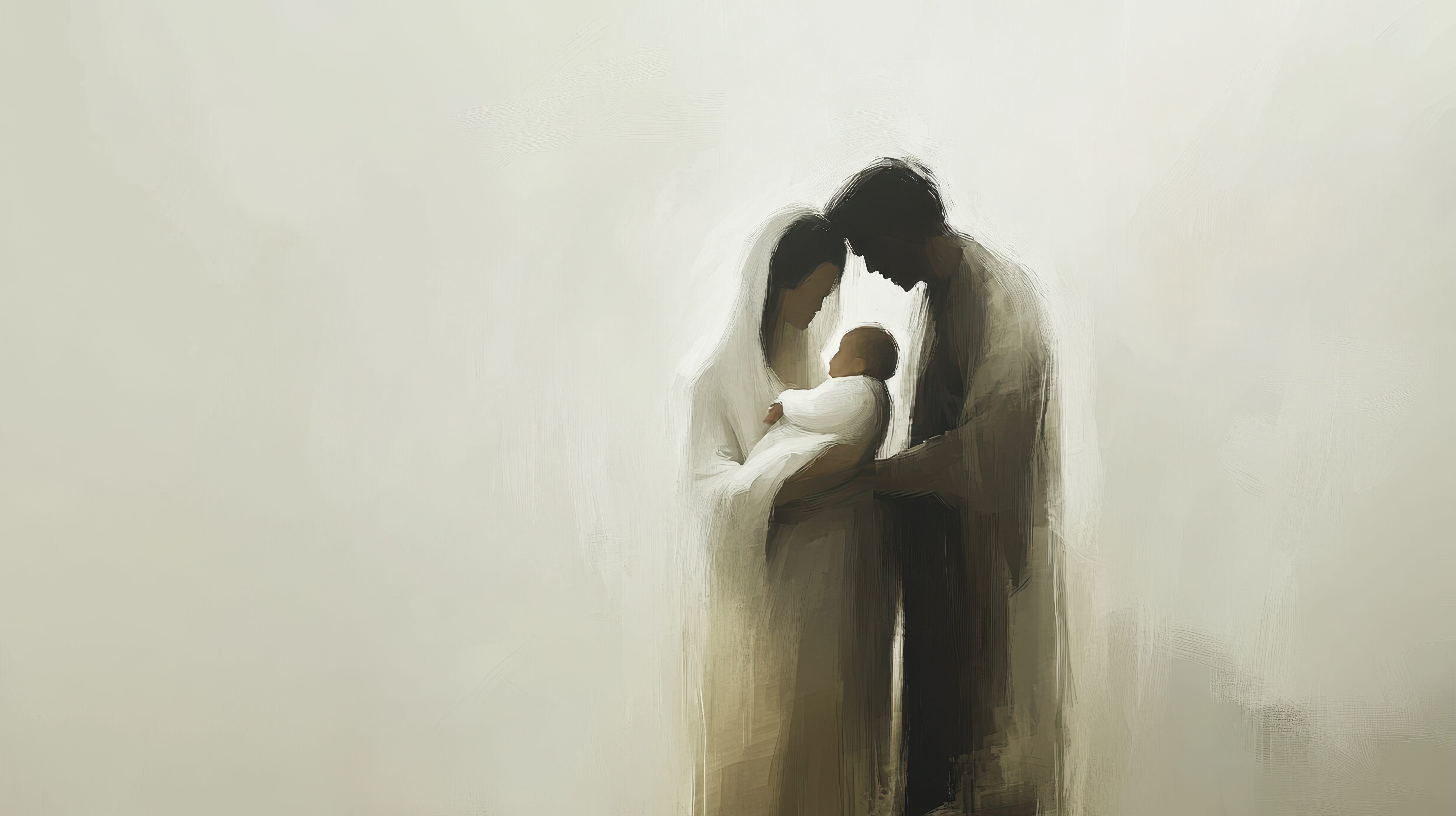
Into that world arrives an infant that only Mary and Joseph know was created to undo the order of the entire God/Man relationship. In near anonymity, these two faithful servants of the Lord obediently followed the words of the angels and brought a miracle into a world surrounded by evil and darkness.
Our planet today seems eerily similar. An empire rules the world increasingly by force and not goodwill or democratic values. The moneychangers control the money. The taxes are oppressive and in our faces, as the tax collector sits at our doorstep every other month and, by threat of force, demands portions of our income, purchases, or property. Darkness seems to be flooding the zone. Our leaders are corrupt or, worse, ineffective. We are obsessed with sex and the sexualization of everything. If I were a dispensationalist, I would say that we sit on the doorstep of a rapture.
It is undoubtedly as dark and chaotic as it has ever been in my lifetime. But I remain confident that who Mary brought into the world through divine interaction is Emmanuel — God with us. That means something more than a political or societal solution. Mary knew it too.
“He has performed mighty deeds with his arm; he has scattered those who are proud in their inmost thoughts. He has brought down rulers from their thrones but has lifted up the humble. He has filled the hungry with good things, but has sent the rich away empty.”
The more I have paid attention to politics, the less convinced I am that there will ever be a solution that comes from the hands or minds of the politicians. They have devolved into what they were always destined to be: self-interested, money-mongers. Our democratic institutions are failing all around us because we have lost the ethic of Western culture. We no longer have a citizenry that believes that their highest duty is to “love thy neighbor.” There may never be a catastrophic collapse, like a building that loses its foundations, but the end of the post-war era is coming to America. It may just be a continuation of the decline we already lament. Our money will become less and less valuable. The people at the top will be increasingly out of touch with the people they supposedly serve. And the stability that we have enjoyed as a country for the last 80 years will degrade until violence and suspicion are accepted as the ordinary ways of life.
But there will always be Emmanuel—the God with us who allows the free will of mankind to rule the world, allthewhile extending compassion and grace to those who choose it. The Zealots of Mary and Joseph’s time sought a political ruler to end Roman and Herodian oppression. They resorted to violence and agitated protests to make their voices heard. They all ended up dead at the hands of their government, and disappointed in their God for not fulfilling their vision of prophecy. Jesus was nothing that the people wanted at the time. Even after his incredible ministry in which he healed the sick and made the blind see, the masses turned on him and watched in celebration as the Romans crucified him.
If there is a lesson this Christmas season for me, it is that I have lived as if I don’t really want what Christ offers for our world. I like political solutions. I want the America that was promised in 1776: the one where I control the outcomes—an America where my work, voting, and activism can change the course of mankind. Jesus, on the other hand, offers me something so much more significant than the temptations of being like God. His name implies his offering. Emmanuel. With us. No hoarding of gold or silver or Bitcoin will ever be as good as what it is that Jesus offers.
“Therefore I tell you, do not worry about your life, what you will eat or drink; or about your body, what you will wear. Is not life more than food, and the body more than clothes? Look at the birds of the air; they do not sow or reap or store away in barns, and yet your heavenly Father feeds them. Are you not much more valuable than they? Can any one of you, by worrying, add a single hour to your life? And why do you worry about clothes? See how the flowers of the field grow. They do not labor or spin. Yet I tell you that not even Solomon in all his splendor was dressed like one of these. If that is how God clothes the grass of the field, which is here today and tomorrow is thrown into the fire, will he not much more clothe you—you of little faith?”
A friend asked me the other night, as we sat at dinner, as I told him of my struggles with politics and America this Christmas season, if I was an Anabaptist now.
“No, I still think we have a role in this,” I answered. “But I think my expectations should be far more focused on Jesus than earthly outcomes.”
This Christmas season, I have been reminded that life is so short and temporary. Children grow up, parents age, and things we love fade away. But God With Us? Eternal.
On the way home from the dinner with my friend in Denver, I put on Rich Mullins. He’s always been a favorite of mine. His lyrics are always like a punch in the gut, and my ride home was no different, as his lyrics reminded me of the actual order of operations in the world. As Spotify shuffled through the songs and in the hum of the night on I-25, I was shocked back into the truth of what Mary and Joseph must have known. Life is fleeting, and what we think is necessary for the good life isn’t always found in the misinformed set of ideas that we dogmatically hold on to. Our politics will fail. Our money will fail. Our culture and society will fail. That is the history of mankind. But Emmanuel? That promise is different.
Blessings to all of you this Christmas. I am thankful for our conversations here and the chance you afford me to flesh out the ideas I have about politics and culture. I appreciate it when you celebrate with me or grieve with me. Having an audience to write for is a grand gift, and it is you who has given it to me. I do pray for our country and our discourse. Perhaps our willingness to lean into the attitude of Mary on her journey to Bethlehem, as she brought into the world the one who would save it, is how we can strive to live in peace and goodness to one another. Merry Christmas.
I was just reading Isaiah today and thinking about it how it was written as prophecy but we now live in a world where it has been fulfilled. Praise the Lord we can now read it differently. No future tense, no past tense - it is the here and now and forever.
Unto us a child was born, Unto us a Son was given; sovereign rule and providence is on His shoulder. And his name truly is Wonderful, Counselor, Mighty God, Everlasting Father, Prince of Peace, Jesus, Master. His kingdom reigns forever.
It is time I start living and believing like I am currently in His kingdom. His kingdom is full of peace and joy even in the suffering. I pray His blessings on all of you!
“His name implies his offering. Emmanuel. With us. No hoarding of gold or silver or Bitcoin will ever be as good as what it is that Jesus offers.”
Yes. God with us. So grateful.
Beautiful and poignant post.
Merry Christmas! Thanks for sharing the gift of your writing and research with us all year long.