
Quite a Birthday
Today it is worth remembering the wisdom of George Wythe and why self government requires more than our current efforts.

Apologies for the long gap in my writing. Between a wedding for my son, a busy summer of travel, concerts in Los Angeles, and a general sense of frustration with the immovable aspects of Washington, my mind has been given to other things besides politics or the state of the world. I ceased checking in on X. Probably the best thing I have done in some time for myself. The hyperbolic, crisis-by-the-second world that exists in that endless stream of consciousness is too much for the human mind to grasp. I stopped wondering who was to blame for Iran. It remains the most puzzling aspect of the Trump administration, but in the end, it feels eerily similar to all other misadventures that the “intelligence” class drags the country into: a long, unwinnable, undefinable excursion with no real end and no real objective ever achieved. I still listen to podcasts to fall asleep, but even those have become dull. No one really seems fully “correct” about anything, so they are a series of long discussions about fearful possibilities, but no real wisdom. I say all of this, not to excuse my lack of participation, but to give a general sense of my disillusionment with our current state of affairs as a country, and why, after being so feverishly devoted to writing and speaking, I have had a lesser appetite to engage in it all.
“America” turns 250 years old today. Quite a birthday. I suppose on many levels, there is something majestic to celebrate. This country is still spectacular. Last night as I heard the clean, soft beauty of a solo trumpet at the Colorado Symphony, I was reminded of how creative our people are. Airplanes, Cars, Computers, Movies, and jazz are all American creations, all born of a country that freed itself from the old ways of monarchy and allowed for an experiment in liberty. Imperfect and flawed to be sure, but unique in its premise: that mankind needed no king to direct its path.
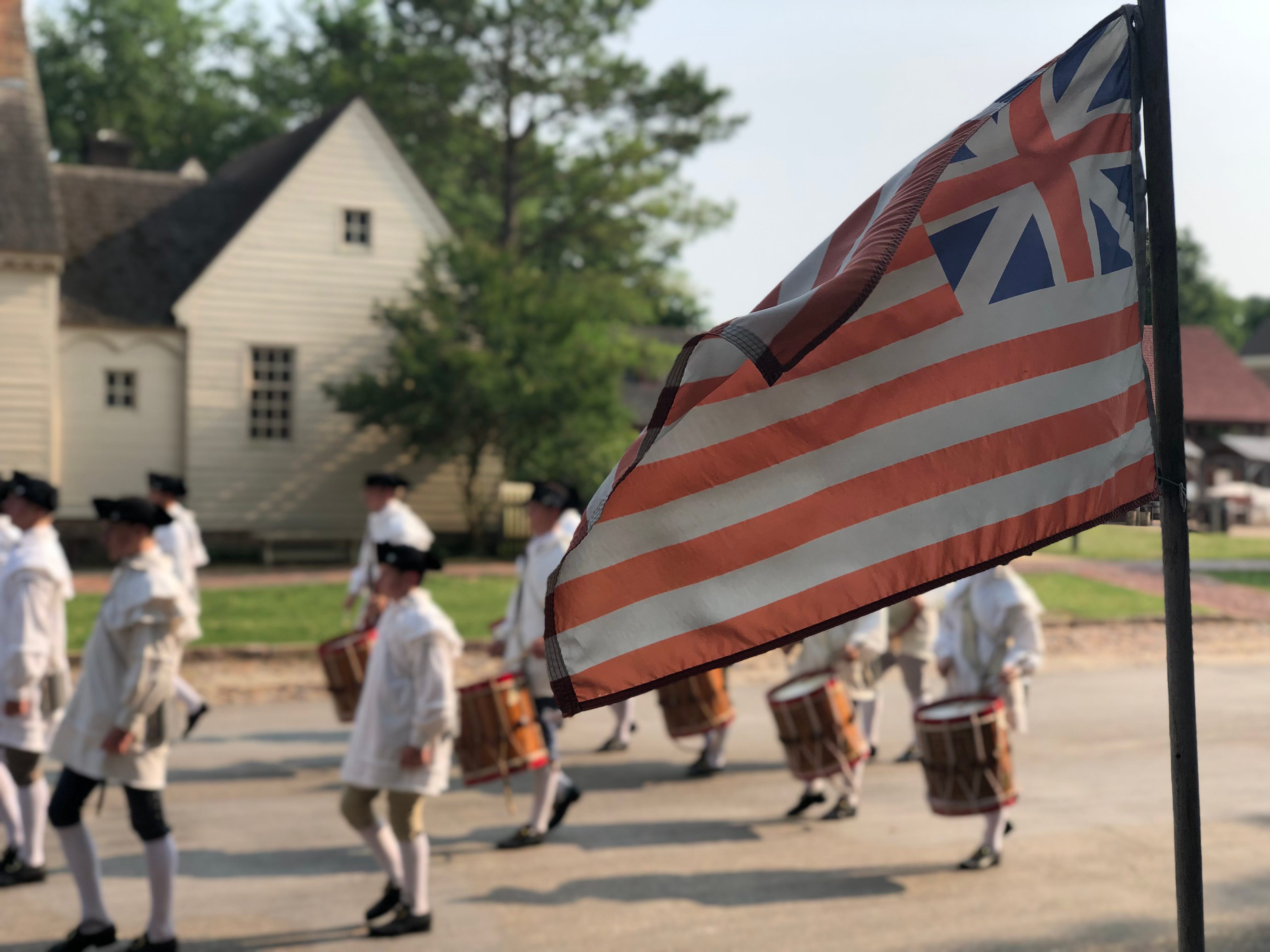
As I lay in bed late last evening and heard the early firework blasts, I was reminded of the coming Independence Day celebration. My thoughts took me to George Wythe. Of all the founding fathers, he has become my favorite. His intellect, wit, and wisdom seem to be something our political class lacks in our modern moment. I discovered him through our trips to Colonial Williamsburg over the years.
It has become a place we gravitate toward for family vacations, or simply to retreat from the hyperactive pace of the twenty-first century. A stroll along the streets or a step into the blacksmith shop seems to ease the frenzy of a world that has seemingly gone mad. In the last ten years, they have added Mr. Wythe to their cast of interpreters. His speeches on the Charlton Stage or in the Palace Gardens resonate more deeply with me than even Mr. Jefferson these days. I revisited a few of them this morning from past trips as a way to celebrate the Fourth, and remembered why his wisdom is so necessary as we venture, upon our own vessel, into the next years of our country.
There isn’t much new under the sun. Our struggles seem eerily similar to those of the past. Frustrations about inflation and ruling-class leadership were there almost instantly when the Declaration was signed, and then when the Constitution was adopted. We have inherent tendencies as a species. We look for answers in places that were never designed to hold them. As Mr. Wythe so eloquently describes, the system that we have chosen is one in which we “took the crown off of one sovereign, and placed it upon the heads of thousands.” That comes with a terrifying responsibility. I have the duty to absorb the same work of a soverign king. To rule over my own world with the kindness and fairness that a good king would.
Admittedly, I placed too much emphasis on finding the “right” person to run the country. That exercise will never be an endeavor with much fruit. There is no man or woman capable of such a burden. The machine that has been built is designed for stability, regardless of who sits atop the theater. That stability is defined by those who run the government and is exclusively for their benefit; something I find disappointing and filled with frustration. The American people are in want of a newer form, I believe. They seem to be saying it with the people they elect. Democratic Socialists are gaining momentum in local elections, as are populist voices on the right. The system does seem to have morphed from being one designed and owned by the people to something run and enforced by edict by those already in power. What we celebrate today is an idea that has probably faded from possibility under the current constructs. Self-government is hard. The Israelites clamored for a king. The Romans longed for empire. America, burdened by the mantle of global leadership, buckled under the pressure and made its own closeted form of empire too. Mankind is interested in abdicating his responsibilities at almost every opportunity. Someone, somewhere will fix this mess. Elections are brief placating moments to subside the frustrations of the cumbersomeness of the blob-designed world. But we play into it well. It is why understanding Wythe is even more important than ever. It is one thing to say we love liberty and freedom; it is an entirely different thing to create a world for our children and future generations of Americans that allows for it. That is the difficult work. We have conditioned our people that government is designed as an enforcer. A blunt end of a bat that can bring our disagreeable neighbors or political enemies to heel. Attend any city council meeting if you think that’s an exaggeration. We want the people behind the desk to do the hard work of being a neighbor. When my “rights” conflict with yours, who shall prevail? Not an easy question to answer. The twentieth century said that it should be the responsibility of the bureaucrat or the politician to sort those conflicts out. Perhaps that is the system we think most effective and beneficial for our safety and happiness, but what has been built is not oriented toward liberty, but rather toward the gods of “order,” “rightness,” and “self.” Wythe knew that conflict would be central to the debates of building a nation.
Wythe understood the fallibility and fickleness of humanity. That a strange conflation of self-interest and self-government would intersect in places that made it difficult to sustain liberty. Our slavish devotion to the god of economics has made it difficult to live generously for those who come behind us. We surrender and ignore our responsibilities to the next generation to ensure we have “enough” to weather future storms of inflation or tax burdens. We see the present as the only thing that matters. And truthfully, that was always an inherent flaw in our system. Adams knew it. He said that without the restraining forces of virtue, the Constitution would become wholly inept.
“Our Constitution was made only for a moral and religious people. It is wholly inadequate to the government of any other.” - John Adams
Admittedly, these last months have been sad and frustrating to watch. Why politicians decide to do what they do is often beyond me. I can only know one thing: that I am not in the room. What we see from afar is often only the curated version that political enemies hope to present. That is no excuse for the choice to go to war, or for the abandonment of key campaign promises, but it is the fruit of reality that the people have placed too great a demand upon its leaders, and on a system that is no longer designed to lift up and encourage the flourishing of liberty. The solutions, as Wythe believed, are only available to those who place the burden of governance upon their own heads.
We have a lot to celebrate this anniversary of the Declaration. No place has given a greater birth to so much. Our challenge resides in the ability to pass it on to our children. They struggle to believe in the promise because we have demonstrated to them that self-interest is all that matters. Our future lies in our ability to resist temptations offering momentary benefit at the expense of those coming behind us. Our ability to sustain this great vessel upon the waters of self-government depends upon surrendering our past patterns and dedicating ourselves to those whom we may never know, but who should prosper in a life on the waters of freedom and liberty.
Here’s to the next 250 years.
That actor is awesome!
🇺🇸