
So What Now
Something I wrote years ago as I contemplated the role of the church and faith in a growingly tumultous world.

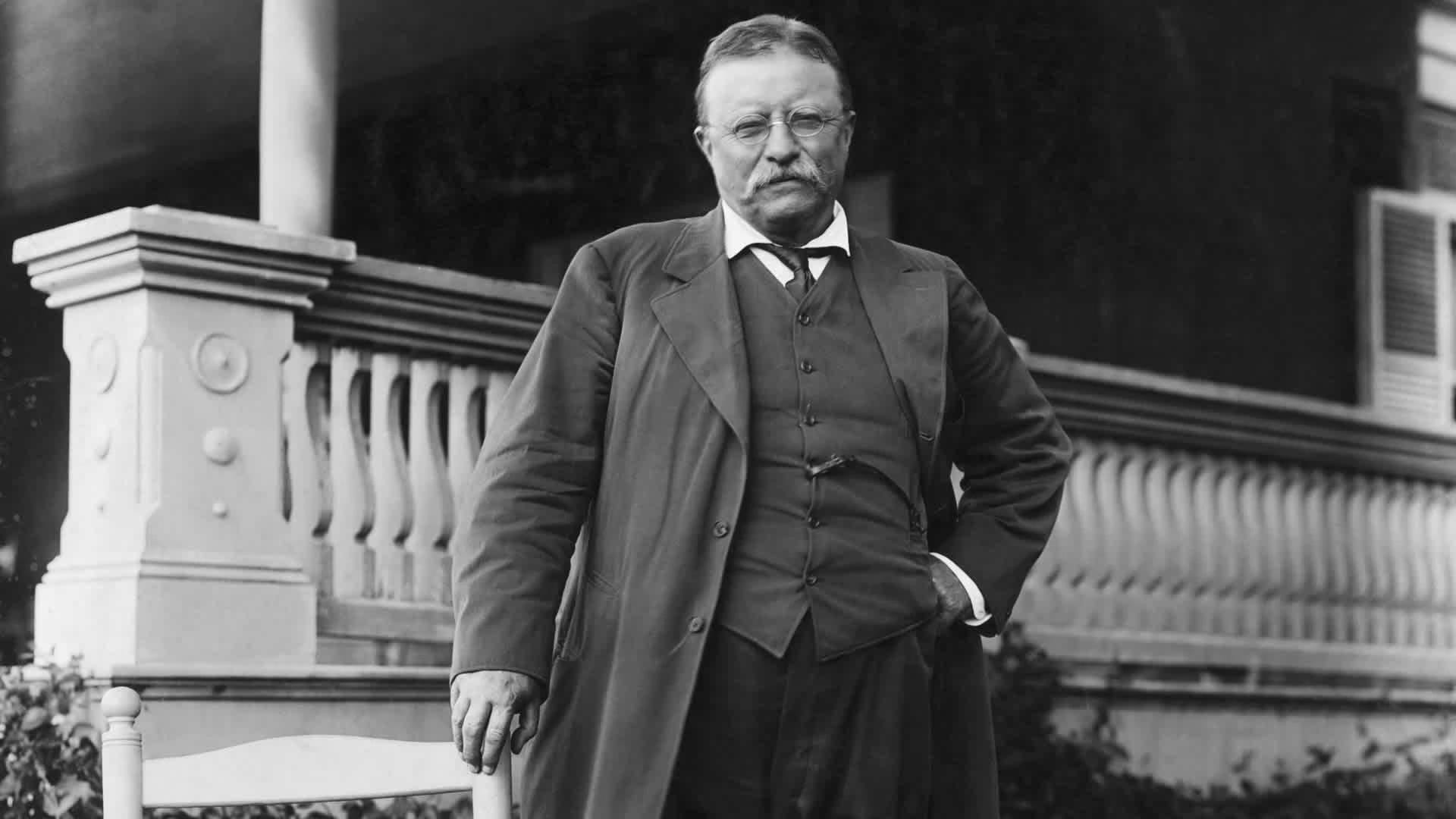
“It is not the critic who counts; not the man who points out how the strong man stumbles, or where the doer of deeds could have done them better. The credit belongs to the man who is actually in the arena, whose face is marred by dust and sweat and blood, who strives valiantly; who errs and comes short again and again; because there is not effort without error and shortcomings; but who does actually strive to do the deed; who knows the great enthusiasm, the great devotion, who spends himself in a worthy cause, who at the best knows in the end the triumph of high achievement and who at the worst, if he fails, at least he fails while daring greatly. So that his place shall never be with those cold and timid souls who know neither victory nor defeat.”
—Theodore Roosevelt
It might be odd to quote Theodore Roosevelt to help support an ideology of grace and giving. After all, Roosevelt was from an era that birthed and celebrated the ethics of hard work intermixed with the political manipulation of Christianity to gain power in America. Roosevelt may have been that ideology’s most devout spokesman. He was a progressive who believed it was the State’s responsibility to use the power of government to accomplish altruistic goals that were backed by his interpretation of faith. Roosevelt had his issues on a grand scale to be sure, but there is an event that happened to him as a human that I believe gets at the core of the need for gracious living—and demonstrates why his quote is so incredibly powerful for us as people of faith.
Few know of this story, more than 120 years after it happened. While Roosevelt was a representative for Manhattan at the New York State Assembly, his first wife, whom he adored, was pregnant with their first child. He received word via telegram that his wife had just given birth to a beautiful daughter. Moments later, another telegram arrived and insisted that he make his way home from Albany immediately. His mother and wife were ill, and the prognosis was not good. Roosevelt arrived home to see his healthy new daughter, but his wife and mother were dying. Only a few hours after he arrived home, his mother was gone, consumed by typhus. Shortly after that, his wife succumbed to the trauma of childbirth and was dead as well. Roosevelt’s journal entry for that day was simply a giant X with the words, “The light has gone out of my life.”
In the 21st century, we are the separated interlocutors. Conversations often happen from a distance, or, more likely, they are monologues. We watch from afar as if we were modern-day Edward Hoppers, peering in like voyeurs to see how others are living far greater and more interesting lives than our own. The sensationalism of the media has made us distant observers of how others live, and perhaps more insidiously, has made us the ever-present critic. We blast others’ thinking from afar, slinging arrows in veiled Facebook posts or Reddit comments. We have ceased engaging in civic institutions like the church or the Rotary Club and instead have worked to utilize those entities as false fronts to win over political positions and gain power in government and other civic spaces. We have completely abandoned conversation and have instead broken into tribes. In the meantime, our politics have become less civilized. Our institutions are ineffective, and our agitation at the very humans we are called to love is at an all-time high. We love to play the role of the critic. It’s much easier to locate disagreement than it is to jump into the arena of ideas and love people regardless of their thoughts, behaviors, or ideology. I like the story of Roosevelt because it demonstrates the choices we have as believers. He was a powerful politician, endowed with incredible giftedness and wealth, but those things couldn’t save him from the same devastation and heartache all humans face. Yet despite this great tragedy, he continued to choose to get into the arena. He could have easily chosen to sink away, and few would have blamed him for that choice, because life had dealt him such a tragic heartache. The circumstances he endured could have made him bitter and angry, someone who could have easily become a critic. Instead, he decided to “get action,” and get back into the arena of life.
I have spent most of this book being incredibly critical of the evangelical theology and the resulting institution of the Church. Hopefully, some of that criticism is not just griping but is instead introspective, helping me understand my part in the outcomes that we currently observe, and ultimately helping us as believing people find a more constructive way forward. I think there are actually solutions that can change our pathway as a society and as a Church that could have positive, generational impacts—but these solutions require a willingness to set down the norms we have artificially burdened ourselves with.
These solutions are available to us not because of our capabilities or obligations to our religion, but because of the love of God that changes our hearts. We should want to be involved in the transformation, be willing to dive in and make things better. When we are transformed by grace, we can be willing to listen to others—really listen. We can stop our monologues and sit at the table with people, even when we don’t see eye to eye. Because of God’s grace to us, we become willing to defend our thinking in a way that is kind and good—and become willing to sit down and admit our biases when our thinking is off base. His love for us enables us to have a mindset that is willing to look at things in our culture and engage with them, as modeled by Jesus. We are empowered through His grace to understand that standing up for “what is right” might only be standing up for what we presume to be right, not what actually is. We become capable of having a willingness to assess our theology; pursue its contexts, and be honest about what we actually believe as Christian people. Are we really standing up for theology, or are we just standing up for what someone told us was theology? It’s very easy to have our ears tickled—in and from any direction we want. Evangelicals have often quoted the “ear-tickling” scripture from Second Timothy as a way to bash the prevailing culture and the modern Church’s attempts to engage people outside of itself. But if we are honest, I wonder if we don’t have our own leaders and communicators that “tickle” our ears to hear the things that justify our isolation and condemnation of culture, our thoughts of inferiority towards non-believers, and the elevation of our own life behaviors as superior to others. I have been more than guilty of this—I like to hear the things I want to hear. It keeps my faith tidy and easy—and even more, it keeps my world small. If I don’t have to engage with the modern-day lepers, I feel much better about life and living.
Don’t hear in this a ticket to abandon good things and morality. I am not suggesting that today’s dominant culture has it figured out, and the Church and her people should just “go along to get along.” Instead, I am advocating that together, as the Church, we might engage in real relationships with people outside of our tribe to be able to understand the philosophies under which other people operate. From there, we can love people in that space to help them understand that God has an ultimate design for their relationship with Him. I think it is imperative for believers, who ultimately are the Church, to utilize the concepts of this common interest community in a positive way. We would be wise to pursue the goodness of what could be, rather than abandon the institution of the Church because it is currently ineffective and maligned. I actually blame no one in this current era for the state that the Church or our mainstream culture finds itself in. Fundamentally, in theology, there is a battle between good and evil, and to ignore it is at best naive and at worst playing accomplice to sinister forces. As the Church, we should be the frontline caregivers who help people understand that God has something amazing in store for their lives. We have to become the honest purveyors of good thinking and kindness. We can’t give mainstream culture either extreme that we have formerly provided: neither fire and brimstone theology that casts God in the light of white fire and fear, nor slipshod, flowery love-speak that neuters God and makes Him only one degree better than the flower people. Instead, we must recognize that powerful theology about redemption and the nature of God can actually transform everything.
We have the opportunity through this incredible gift of grace to engage the people of our world with kindness and understanding. Amazingly, this is the call of the Church in the 21st century. We have this wonderful opportunity to realign our thinking about who God is, human nature, and our need for salvation, and what it is He wants for His people. We can learn to tolerate the depth and nonlinear realities and tensions that theology creates and, in turn, become a people filled with humility and compassion for others. We are linear, time-oriented creatures who live with finite terminations. We are also created by an infinite, all-comprehending God of the universe. Those two natures will inevitably collide consistently and often. They will create tension and incongruence. If we don’t acquiesce to living in that tension, it will frustrate us and leave us angry, rather than satisfied—and worst of all, it will keep us from loving the very creatures that God has called us to look out for. I genuinely hope that as believers, we engage and become the Church of meaning and compassion and get muddy in the process.
If any of these ideas have resonated with you, then we have been gifted the incredible opportunity to jump into the arena together. To get dust on our faces and be scarred by the difficulty of the process. We can lovingly call out the Church when we see her wandering into the caves of isolation. We can abandon the language that encourages abstentions and resolutely defend those who have no voice.
I want my children to see value in God and in the people who make up the Church. I hope that we are all a part of the solution. I do believe in transcendence and heaven and salvation from a troubled world—and I believe this is something for anyone and everyone who will listen, and probably even more for those who don’t want to listen or who have stopped hearing. I believe God is in the light as much as He is in my hidden places. If I can live in this truth without inhibitions towards my behaviors and His opinions of them, and truly function in the grace of the salvation story, then I think I can gain voice in the lives of others who don’t view God in the same manner. I hope this will be the Church of the 21st century. Not one that spends its energy and thinking on what has gone wrong and how ill mainstream culture is, but instead one that decides to sit at the table of sinners and listen to the wounds of the hurting. It would be a Church that stopped deciding how to package up God into the tidy arena of our small minds and instead gets its hands dirty to help those who have no hope or interest in God. It is time to set down the small weapons of ideology and instead be the helpers and peacemakers.
I hope that when my time comes to depart this world, I will have exhausted all of my energy into building this kind of Church and exposing the goodness of the God I know. I would like to be more than a critic. I would like to be someone who changed people’s opinions about God, one person at a time, in the context of love. When Roosevelt was in his darkest moment, he didn’t implode. He decided to “get action” and make something of his despair. I am tired of hearing how ineffective the Church is and how irrelevant God is to humanity. I want to get into the arena and have my face “marred by dust and sweat and blood, [to] be someone who strives valiantly; who errs and comes short again and again” but remains resolved that God is worth knowing and having hope in. I want to be someone who, with all my shortcomings, is pleading for the hope of others to know and be loved by God. When I have breathed my last, I want my sons to know my life was spent pursuing kindness and love towards others, and that my first steps into the ever-present light were made more beautiful because I truly understood that the grace of God was sufficient.
And let us consider how we may spur one another on toward love and good deeds…Thank you, Aaron.
“We are empowered through His grace to understand that standing up for “what is right” might only be standing up for what we presume to be right, not what actually is.” This! This is everything. If only everyone on earth had the capacity to be willing to be wrong. It would be a much better place. 🙏🏼🤍