
The Control Gods
Our current system is dedicated to the worship of anything but the Creator.

“Cannot you see… that it is we who are dying, and that down here the only thing that really lives is the Machine? We created the Machine, to do our will, but we cannot make it do our will now. It has robbed us of the sense of space and of the sense of touch, it has blurred every human relation and narrowed down love to a carnal act, it has paralysed our bodies and our wills, and now it compels us to worship it.” - E.M. Forster, The Machine Stops
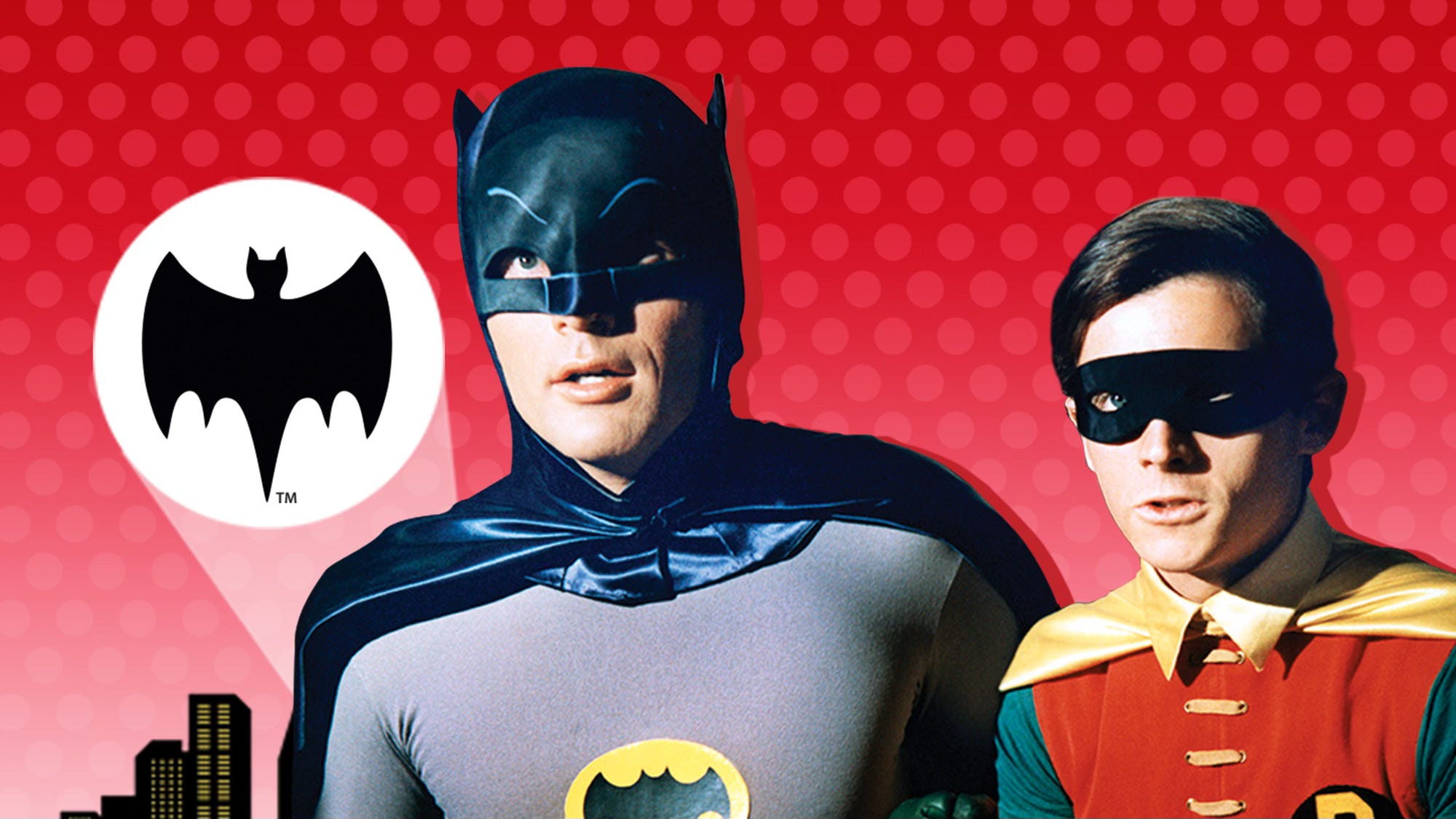
The other afternoon, I was home hanging out with a few of my sons when we started to reminisce about the old Batman show with Adam West. I don’t remember what brought the topic up—perhaps an Instagram reel of the Joker and Batman dueling it out with a set of dumbbells and cartoon “Kapows” across the screen— but whatever it was, it prompted us to put one of them on. In this particular episode, the Riddler was setting up the dynamic duo to entrap them in a scheme of some sort. There were the usual camera-turned-sideways shots of Robin and Batman walking up the side of a building, and the fake fights, but something else caught our attention. The dialogue would often be interrupted by an admonishment from Batman to Robin about crossing the street or the necessity of “honest policemen”. Robin, at one point, even discussed how important it was to brush his teeth after using them to escape from a lumber saw. Holy molars Batman!
My kids picked up on it right away.
“This is almost a strange propoganda dad.”
He wasn’t wrong. The America of the 60s was wrestling with many of the same things we are today. A sense that the order that had been was changing. The civilization was becoming something different. The morals and ethics of the 1800s were over. The last remnants of a world that existed prior to the Civil War were now only memories, relegated to the backward corners of the South. America was trying on the suit of empire and struggling to find its footing. The media and the political order of the day were all trying to understand how to get the population to come along for the new experiment. The Vietnam War was in full swing, and the quiet unrest of the early 60s was giving way to overt restlessness and civil disobedience. There has been a distinct need in this age of pseudo-empire to ensure that what the leaders wanted was believed in. The system morphed into a strange deity, complete with doctrine, theology, and dicastery. It required adherence in order to function. Standardization became the highest and best goal of the government and the surrounding entities of Washington.
Religious systems require standardized points of order. Doctrines and social pressures within the institution can easily corral mass numbers of people into manageable lots. The use of these tactics wasn’t new in the 60s, but something distinctly different had happened. Prior to this social upheaval, Western governments had always deferred to the natural order of the world, particularly the idea that governments and the men who served in them were subservient to a creator. The moral underpinnings of good government came from a deference to God. The entire fundamental of self-government was based upon the concept that a moral order didn’t come from the whims of man, but rather from a code embedded within the universe, as well as the souls of those who trod upon the earth. In other words, it wasn’t up to man to create the constructs; those were self-evident. The creator had infused everything within the universe with them.
An Unbreakable Compact
But the 20th century had disrupted all of that. Most pinpoint the World Wars as the turning point for the decay of Western Civilization, and to be certain, they clearly destroyed what was left of it. But the cause of self-government was truly placed on unstable ground in the American Civil War. The world of Lincoln and Davis, waged in the battles of Lee and Grant, was the defining moment in the experiment in representative government. Leading up to that war, the debates over tariffs and enterprise were the agitators that intersected with a strong federal government and the autonomy of the states. Our elementary school versions of this war make for easy, tidy answers about right and wrong, but the war was much more about how each individual society within the United States saw its relationship to unity.
Jefferson had always declared that each state was sovereign. The primary author and intellect behind the secessionist document of 1776 saw it as the duty of each state to push back against the powerful central government. He wrote as much in the Kentucky Resolution of 1798:
“That the several States composing the United States of America, are not united on the principle of unlimited submission to their General Government; … that the government created by this compact was not made the exclusive or final judge of the extent of the powers delegated to itself; … but that, as in all other cases of compact among powers having no common judge, each party has an equal right to judge for itself, as well of infractions as of the mode and measure of redress.”
Great intellectual leaders on representative government, like John C. Calhoun, would embrace this concept as the core of their political careers. Calhoun discussed this conflict of government interests in what he described as Negative Power. In his masterpiece, Disquisition on Government, he wrote:
“It is this negative power,— the power of preventing or arresting the action of the government, be it called by what term it may, veto, interposition, nullification, check, or balance of power,— which, in fact, forms the constitution.”
The battle in the United States was over how the central government would be restrained. Almost every political storm from the Constitutional Convention to the final shot at Appomattox Court House was about this conflict of ideology. What is the role of a central and powerful government? The founding generation saw it as an imperative to liberty to throw off the central authority of a king. By Lincoln’s day, the winds had shifted back, and radical Republicans believed it necessary to centralize authority. They saw the Constitution as an unbreakable compact: once in, never released from its bind. Lincoln argued as much in his first inaugural address in 1861, just months after “secessionitis” had started to make its way through the southern states:
“I hold, that in contemplation of universal law, and of the Constitution, the Union of these States is perpetual. Perpetuity is implied, if not expressed, in the fundamental law of all national governments. It is safe to assert that no government proper, ever had a provision in its organic law for its own termination.
Again, if the United States be not a government proper, but an association of States in the nature of contract merely, can it, as a contract, be peaceably unmade, by less than all the parties who made it? One party to a contract may violate it—break it, so to speak—but does it not require all to lawfully rescind it?
It follows from these views that no State, upon its own mere motion, can lawfully get out of the Union; that resolves and ordinances to that effect are legally void; and that acts of violence, within any State or States, against the authority of the United States, are insurrectionary or revolutionary, according to circumstances.”
Lincoln was asserting the supremacy of the federal government. He and many others from the Republican Party argued that the power the Constitution granted the Central Government was an unbreakable contract. No one could leave unless everyone decided to leave. Effectively meaning that it would have everlasting authority unless dismantled by unanimous consent.
I am convinced that our lack of understanding about the Civil War is the reason we have little capacity to undo the wildly out-of-control federal government today. We venerate Lincoln. He has a massive temple built to his memory in Washington. Our discussions about great presidents always start with him as the greatest. “Saved the Union and freed the slaves.” But behind the easy-reader versions of history, what was really at the core of that moment was a battle over who decides the fate of the citizen. Is government a mechanism of the people? A lever that can be pulled and prompted that reacts to the needs of the people. Or is it the other way around? Is it the government that dictates what makes a civilian a good citizen? The war determined the winner not only of the battlefield but of the ideology of the American form of government. The vanquishing of state restrictions on federal power meant the end of something that Jefferson and his generation had left for the flourishing of a people. Government was an entity unto itself — a deity fully autonomous of those it governed.
Progressive Era Control
The last decades of the 1800s were a wrestling match of this new philosophy. The platitudes and intellectual leftovers from the country that existed before the Civil War still constrained the government, but by the turn of the century, a confluence of centralized wealth and political winds enamored with order and science had created the perfect petri dish for the total dismantling of democratic self-government. Intellectual leaders of the time, like John W. Burgess (1844–1931), the founder of American political science at Columbia University and a major progressive theorist, explicitly framed a world-state as the ultimate requirement for the “perfection of humanity” and the civilization of the world:
“The ultimate end of the state is defined as the ‘perfection of humanity, the civilization of the world; the perfect development of the human reason and its attainment to universal command over individualism; the apotheosis of man.’
This end can be realized, however, only when a world-state is organized, and for this, mankind is not yet ready. Men must first be organized into national states, based on the principle of nationality.”
The ethos of that era was to manage people toward perfection, and to most intellectual leaders, it was the mythology of the American form of government, particularly its elevation of the individual, that was preventing smarty-pants management from working. Walter Lippmann, another progressive intellectual, perhaps gave the most clarifying words on why a universal government and world order were necessary:
We are not equipped to deal with so much subtlety, so much variety, so many permutations and combinations. And although we have to act in that environment, we have to reconstruct it on a simpler model before we can manage it. To traverse the world men must have maps of the world.”
The Great War
I have often wondered what it was that caused this immeasurable tragedy. The story, as presented, of an obscure duke being assassinated, plunging the whole world into something that would ultimately destroy Christian Europe, has long been short of rationality. The insistence that some nationalist-style dogmatism meant that peace could not be achieved is closer to the truth, but as I look back on the twentieth century, I have lingering suspicions that it may be more about progressive sentiments of control and global management than about the murder of Ferdinand.
The 1899 and 1907 Hague Peace Conferences represented the main progressive/internationalist effort for peaceful dispute resolution through arbitration and laws of war. Tsar Nicholas II of Russia called for the first one in 1899. He invited the major powers of the world to meet because he saw “the maintenance of general peace and a possible reduction of the excessive armaments which weigh upon all nations” as “the ideal towards which the endeavors of all Governments should be directed.” The leaders of the world at that time were all grappling with a shifting world. The American Revolution had proven an anomaly. France had undergone a multitude of governmental changes, European boundaries were constantly shifting amid revolution and political upheaval, and even America had become something different from its founding after its catastrophic Civil War. The intellectuals of the time wanted the confusion of national interests and the Enlightenment ideology of individualistic elevation to end. They believed that nation-states were outdated and that republic-style governments were too ineffective to maintain a world of order and peace. These conferences were designed to restrain the individual desires of nations and place them under a global order of control. At the first conference, however, it was clear that not every nation was on board with submitting national interests to progressive desires.
Germany participated but repeatedly resisted stronger measures, especially obligatory arbitration and arms limitations. Some contemporary progressive observers noted this as a division between “progress” and “opposition. Colonel Gross von Schwarzhoff (German military delegate) spoke against the Russian disarmament proposals, arguing that military preparedness was a national necessity and that talk of disarmament was unrealistic or sentimental. He was described by contemporaries as the “chief anti-sentimentalist.”
Theodore Roosevelt called for the second conference in 1904, but it was postponed because of the Russo-Japanese War. When it finally convened in 1907, it was clear that the causes of the world's inability to agree on disarmament had become much clearer. In the official proceedings of the 1907 Second Hague Conference, one delegate summarized the split this way:
“Thus the world was divided into two camps of very unequal importance. On one side was the mass of the states of the world, great and small, representing progress; on the other, Germany, representing the opposition…”
Germany was seen as the primary holdout (often joined by Austria-Hungary), blocking what some liberals and progressives hoped would evolve into more binding international law. Baron Marschall was the most famous of the delegates to resist a call for disarmament. The 1922 edition of the Encyclopedia Britannica describes him as “an advocate of a strong naval policy for Germany, he was the exponent of Germany’s resolute and successful opposition to any practical discussion of the question of restriction of armaments.”
As Germany resisted the world's pressure to comply with its demands, tensions escalated. The world stage was a battle between the naval and colonial powers of Germany and Great Britain. Both countries’ inability to restrain their aspirations for global territorial and maritime dominance exacerbated tensions. The 1907 conference left the door open for Germany to challenge Britain for the title and role of world hegemon. This ran counter to the philosophical ideals of the progressives, who were biased toward a British-American world order and believed that any peace should be one constructed and maintained by their version of the world. When Germany refused to play along with the premise, the world was ripe for war.
1914-1945
Historians are increasingly treating this window of time in the twentieth century as a single era. The First and Second World Wars, interrupted by a major global economic crisis, all draw from the same thematic roots of conflict. The wars, in essence, were one long war with a twenty-year interruption of economic boom-and-bust. This grand series of world battles, both on Flanders Field with bullets and Wall Street with crashing stocks, was the last gasp of national states' struggle for sovereignty against the pressures for internationalism. But if we take a further step back, these conflicts might be better framed in a philosophical battle between the sovereignty of the individual and the supremacy of the state. Perhaps the American Civil War was the first battle in a much longer war that vanquished the ideals of the Revolution and created a global superstate. If the timeline includes the struggles in the valleys of Virginia, it becomes clearer that governments, once empowered to be entities in their own right, are relentless in their desire for more control and dominance over those they rule. Perhaps the broader historical context of mankind, who are far more accustomed to being ruled than to practicing self-government, demonstrates that this battle began with King George and ended with the creation of a global surveillance state, backed by the full force of an empire. George lost the battle, but ultimately the philosophy of oligarchy won the war.
The New Kings
The world that emerged after the World Wars was much more in line with the progressives' vision from the early years of the century. Every country became subservient to the greater global good. The institutions established, the economic systems, the management, and the expert class were all fundamentals of this new religion-like entity. All choices that were made by governments or their appendages were in support of the global order. People were to be managed for the benefit of the wealthy and to propagate endless micro-crises that would keep them dependent on the system for their survival and protection. Governments would be fundamentally transformed from having a duty to protect their citizens and the interests of the nation-state to being hell-bent on managing the population into a kind of mediocre compliance. Life for the average person would be one they could tolerate, but cease to thrive in. There would be a perpetual threat of war, of nuclear destruction, of famine, of disease, of economic uncertainty — all with the objective of realigning the citizen away from self-reliance, back to dependence on the soverign. This time, it would not be called a king but rather a litany of monikers: The bureaucracy, The Government, The alphabet agencies. There was no single point to blame, and there would never be a single point of solution. The new kings would sometimes be in Davos or on the Council on Foreign Relations, and sometimes they would sit behind a cubicle wall in a county office, but they would work harmoniously to create a world where those who served the state could be king at any moment over the citizen.
This new world would require devotion to it, and once the citizens realized it wasn’t as wonderful as promised, the new kings would run the same risk as the old ones. They might enrage the citizenry enough to cause their own demise. So they developed a religious construct and made it taboo to ask questions about the system itself. The conversations became narrower and narrower about what could be discussed. Money and inflation? Never. Instead, it became an entire industry of acronyms and terms that made the average person feel dumb and shut their mouth. Government’s overreach and heavy hand in regulation? Not if you needed to use, achieve, or succeed with your land, farm, business, or idea. Instead, they build a culture that demands that anyone come with a hat in hand and a tail between their legs, begging for their permission to do anything. What of terrible injustice, or a court system that acted as unelected deities regardless of the will of the people? Silence! The system has always said the courts have the final say.
The world became a theater that demanded obedience to the story, no matter how ridiculous or punitive the story became to the citizen. The new kings would placate the illusion of a vote, but they knew their world would remain safe because the existing infrastructure was too immovable and too difficult to hold to account at any one point. If anything ever slipped past and was deemed too outrageous by the public, the system would work to fix the leak so it would never happen again. The system demanded full and unadulterated devotion to itself. Aborations and failures that the public was allowed to see were treated as a cancer that needed to be cut out. Not for the sake of the citizen, but for the protection of the system itself.
Media, music, and art all became the house organs of state celebration. Everything was crafted to bolster the system's narrative. These new Kings knew that if the public ever stopped believing in the system, it would collapse quickly. Those who sat on these new thrones of power knew that the money was fake, the institutions were fake, and that civility was in a tenuous bond. They understood that their only real responsibility to the citizen was to keep them in a neutral state. Entertained and softened. Undereducated and unaware of how things actually work in their world. The celebration of belief in the state is all that holds any of it together. If the people nullified the system, all of it would be over in a matter of moments.
They standardized everything — creating new religious doctrines. Housing design, energy consumption, technology all were designed to bring life into a strange mediocrity. Appliances would take twice as long to do half the work of those built just 50 years earlier. Computers would become information-gathering tools. Every keystroke was monitored to determine the operator's buying and consumption habits. Phones would have tracking devices in the name of convenience, and because they were so expensive that a loss would be financially devastating to the average person. Trash would have to be sorted. Masks would have to be worn. Cars would have to shut off at stoplights. All of it was standardized for the subtle reminder that the state was God.
Over time, the citizens just became used to the misery. They shook their heads as they were required to download another app to park, or a waitress shoved an intrusive handheld computer in their face, asking for their tips. Each new step, another lowering of the expectations, and a reinforcement that the state is doing all it can for the citizens. Each fall, they would dutifully march out to fulfill their civic duty and vote, but regardless of who they wanted to lead or what changes they hoped to see enacted through representation, the System would ultimately prevail.
The Divine Reality
This morning, my oldest son was asking me about some theological fundamentals. The kinds of questions young twenty-year-old men ask about the world they are interacting with. Why do bad things happen to good people? Why do some people act in evil ways? How come our culture doesn’t value children? We talked about how I see the world and how morality is built on the premise of the eternality of the human soul and its relationship to the divine. That constructs built by humans are more about human control and behaviors than they are truly based on a code from eternal truth. He asked me how people can hold such hypocritical viewpoints on life and death in our culture. How can someone be against murder or abortion but a devotee of the state’s love of war? They are hard questions to answer, but I told him that what I am hopeful for is an end to the modern System that demands incongruous morality. I hope that as this current version of globalism collides with the reality of a more restless public, it might degrade and be held in contempt by the citizens. I told him that what I hope for is a truer understanding of what most religions, and particularly the Christ has said about mankind’s relationship to the Creator. I believe fervently that Jesus was showing his disciples that the religiosity of the Hebrew people of his time was a broken construct. He was saying that the temple and system of sacrifice needed to end. He recognized that the people were no longer doing things from a place of a pure heart. Sacrifices were no longer offered by the fruits of a household’s labor but rather purchased on the way up the temple steps. And while the system looked powerful and strong, the corrosive cancer within it had rotted its core.
I think the same is true of the moment we live in. Something does feel off. The slogans and sirens from the state no longer seem to be ringing with as much effect on the people. In some ways, it seems we are trapped inside one of the old Batman shows; we know it's fake, we know it's strange propaganda, but this week’s episode must “go on!” In the real world, however, people know that they are beaten up by a system that demands their loyalty and, in return, only rewards them with deeper hardships. There’s no glossing that reality over, Batman.
There seems to be a craving for a reorientation to the divine. To be called from the place of humanities’ eternal components —their souls— into deeper things. The institutions are much like The Wizard from Oz. They have been caught in their own incapacity to fulfill their demands for order, and the people are starting to question whether they remain obligated to the falsehoods the wizard insists must be adhered to.
In his 2013 book The Problem of Political Authority: An Examination of the Right to Coerce and the Duty to Obey, Colorado University professor Michael Hueme argues that the state has no special moral status that ordinary people or organizations are somehow in short supply of.
“Political authority is a moral illusion…Acts that would be considered unjust or morally unacceptable when performed by nongovernmental agents will often be considered perfectly all right, even praiseworthy, when performed by government agents. Why do we accord this special moral status to governments?”
Thankfully, the draw and compulsion of the human soul is to liberty. To live a free and peaceful life. Ultimately, those desires will prevail against the demands of a machine built on fakery. Jefferson knew it when he and his committee wrote their letter of divorce from King George; we will have to do the same from the kings who have made the trenches of obedience they insist we must live in. Break out of the religion of the State and the System. The world can be remade again. It is time to banish the control Gods and cease to give them the power to overrun the lives of the citizens.
In the modern world of American politics, many do not understand the importance of prioritizing, or even how to prioritize, especially progressives.
https://torrancestephensphd.substack.com/p/when-progressive-policy-priority